
UI vs. UX Design: What’s the Difference and Why It Matters?

In the digital world of 2026, UI (User Interface) and UX (User Experience) can often be confused with each other; however, they both are two entirely separate concepts that need to function seamlessly together. In a car, the UI would equate to the leather steering wheel, shiny dashboard, and paint job; all the things that users see when they use a product. The UX, by comparison, would equal the power surge of the engine, the smoothness of the ride, and the overall ease of transportation. While UI focuses more on what is seen, UX concentrates on the process itself.
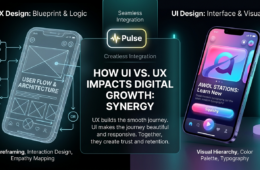
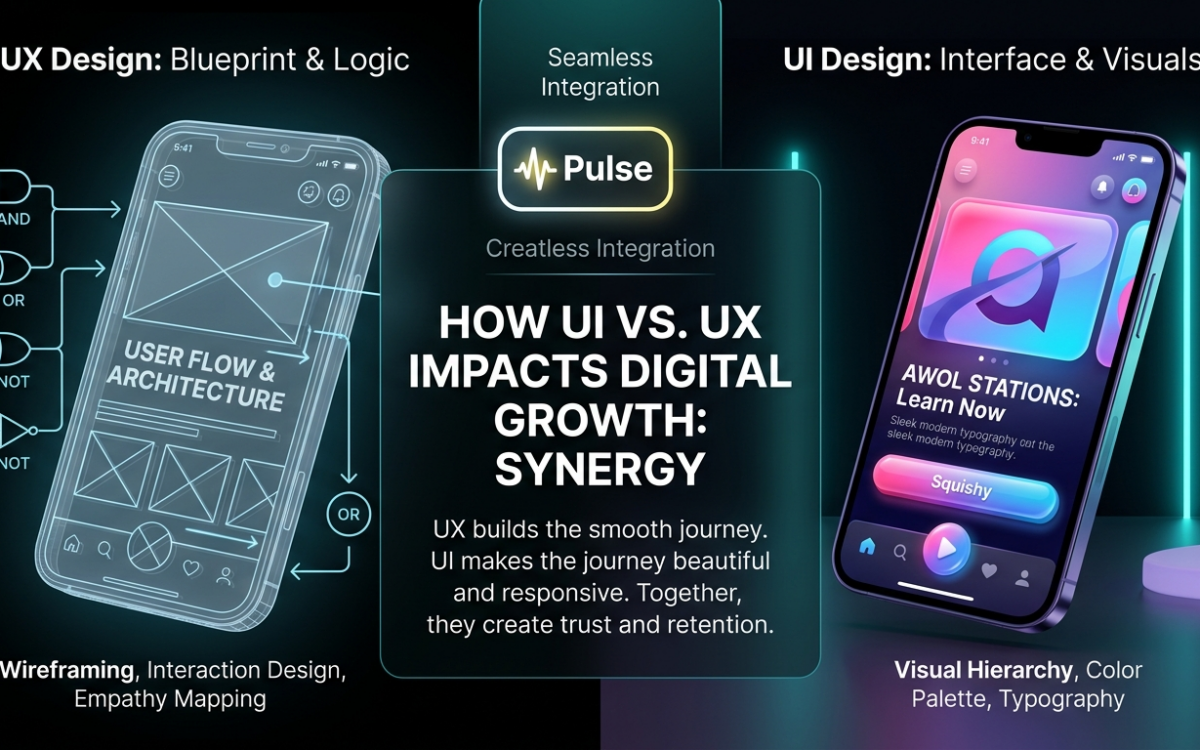
The UX part is all about analysis and starts well before any pixel hits the screen. It starts with extensive user analysis and creating personas, followed by wireframe creation in order to plan a logical flow. The UX designer will always ask: “Does this process work efficiently, can it solve the user’s problem without causing any friction?” In the current age of “agentic commerce” when many AI agents help the user find what he needs in apps, the role of UX has transformed into focusing on predictive logic and micro-conversions. If the UX isn’t right, no matter how aesthetically pleasing the UI looks, the product won’t work.
The UI represents the personality of the product and its branding efforts. The UI transforms the UX wireframes to provide a highly realistic and responsive interface using typography, color schemes, and interactions such as buttons and toggles. The current trend in UI development in 2026 is “Tactile Craft” and “Elastic Typography.” These trends have abandoned the conventional minimalist style of UI to develop human-friendly interfaces that respond to touch. The primary goal of the UI is to create the initial impression, where the visual hierarchy helps users navigate to the desired destinations.
It is at this point that the power of combining UI and UX lies in the creation of real market value. A website may have excellent UX but bad UI and might still be operational, but it would not have the “trust signals” or professionalism needed to attract premium users. On the other hand, having an awesome UI and terrible UX is like owning an attractive house without plumbing facilities; it is impressive, yet it cannot be used. For organizations, this combination is mechanical because it affects retention rates, lowers customer service costs, and helps maintain the organization’s social currency.
In the end, the distinction between UI and UX is important since it will enable you to tackle issues by getting to the root cause. If you are developing a business-to-business portal or even a platform that incorporates AI, then you have to see them as two sides of the same coin. By making sure that you develop both the experience and its visual design, you will be able to create something that is more than just “AI-generated” but actually makes sense for 2026.